
Success is defined as achieving the desired goal. A goal to be rich and famous or simply just to wake up another day depending on the individual. But so often we compare the lives and things of others to equate our happiness without realizing they are no more people than the things they have. It's not what you acquire that makes you great and successful. It's what you bring and who you truly are. So if celebrity and luxury are the apexes of success, does that mean our dreams are invalid if we don't want that? No. Truth is, what defines success is a testament to one's values.
What we value differs from person to person, but with social media being one of the dictating factors of how view the world, some value the opinions of others more than ever. Image is the biggest influence to the point of likes and comments manipulate your whole existence. One can view the lives of others showing a perfect lifestyle, not knowing they worked hard to create this illusion. So if you can look successful, why work hard to be successful? Because much like our heroes or idols, it's the journey and struggles we persevered that define and inspire us.

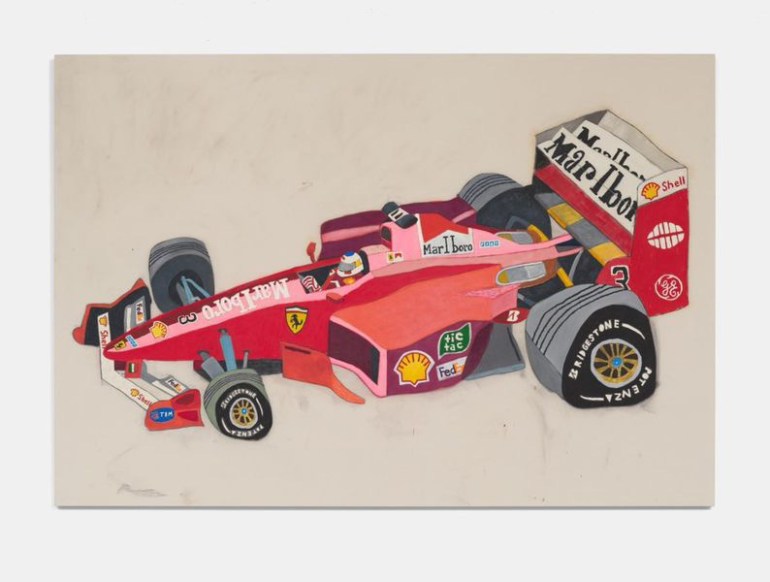
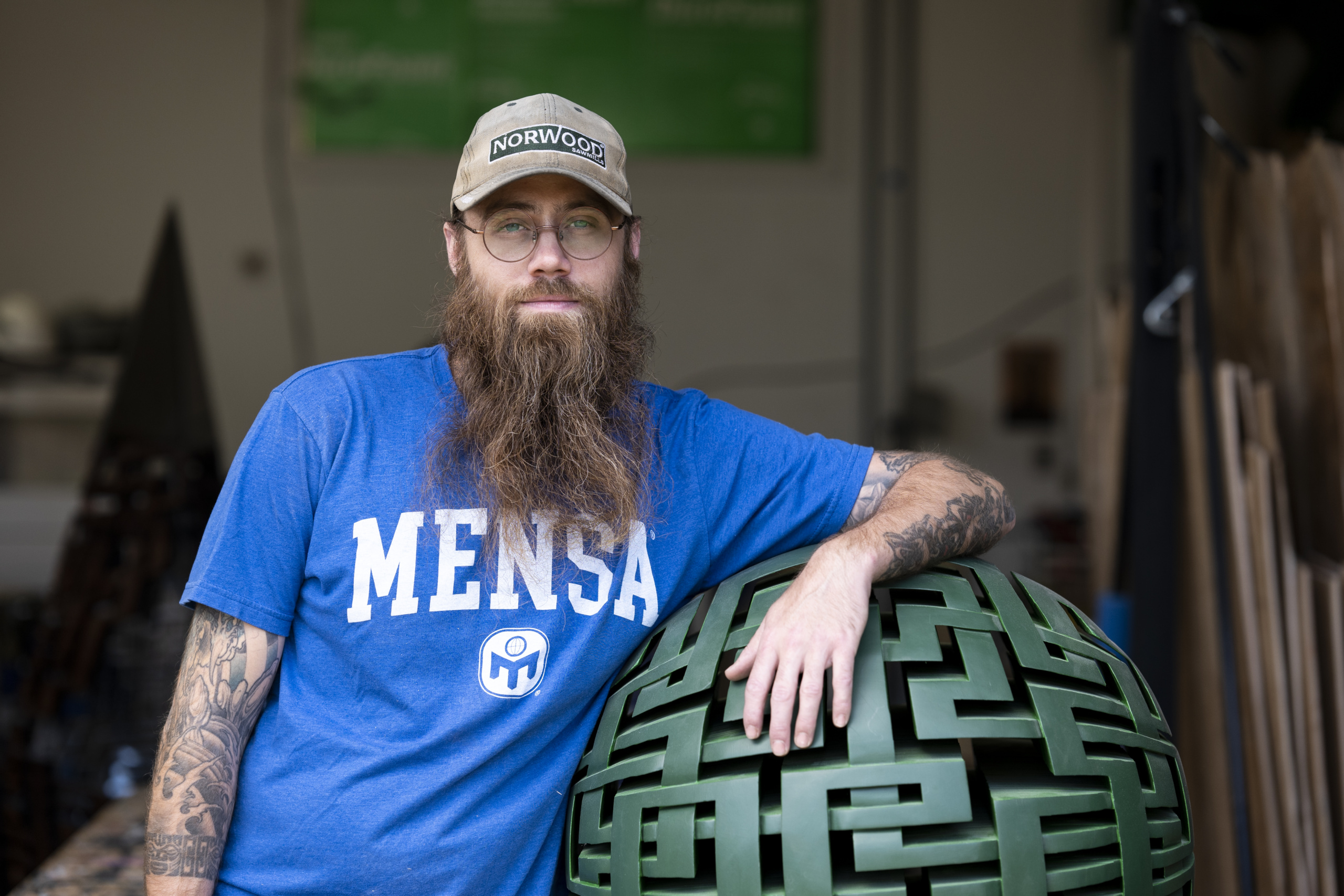
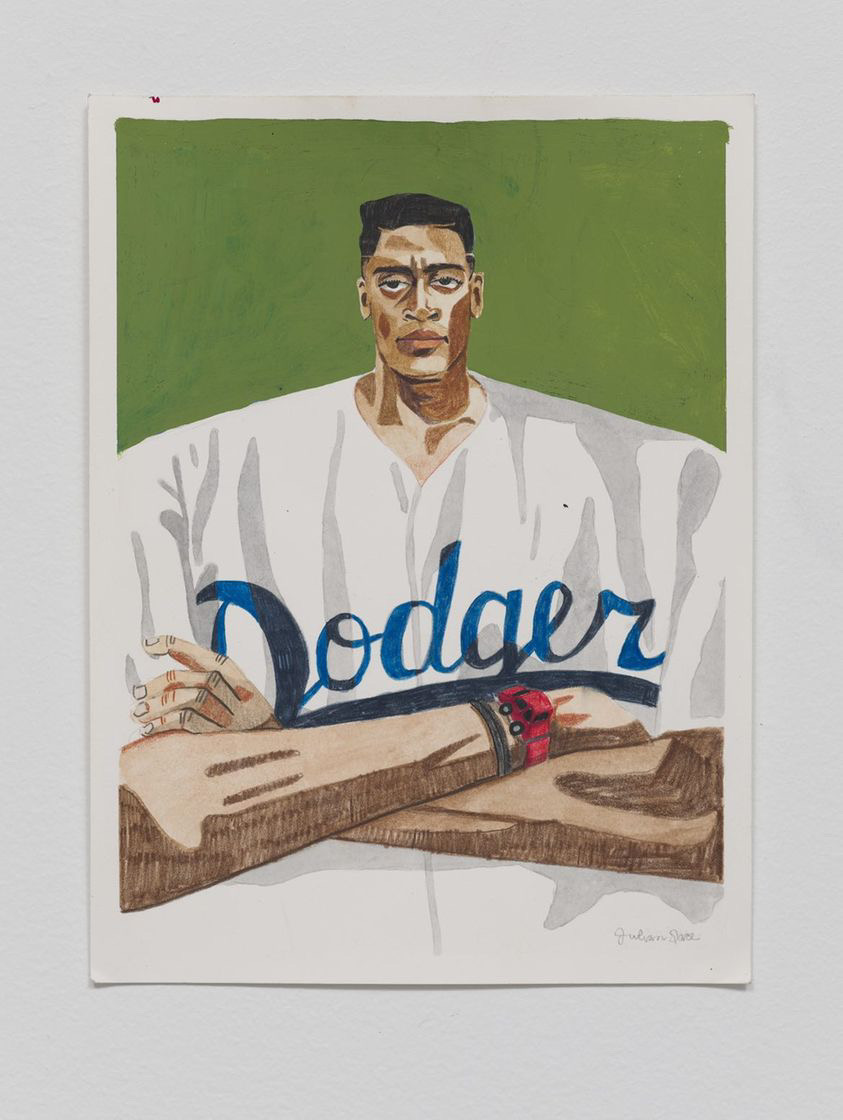
Julian Pace, a self-taught painter whose ambitions led him from Seattle to New York and now Los Angeles utilizes famous figures and things that attract us to reshape how we view them. His precision in oddly detailing his subjects stands out as a form of alienation in his paintings. The abnormal use of portion, roughness, and stale coloring illustrates that what we are attracted to isn't as perfect as it looks. It's a full embrace of one's character and imperfections assuring us that we all want to achieve something; so appreciate the process more than the product.
Interlude and interview by Ian Randolph

1. In all mediums of art, social media has been a tool to promote an artist's work without the hassle of getting shown in a gallery. It can be lucrative, of course, but when one does it opens them up to a market where there's more competition for exposure, let alone discovering other artists who may have a similar aesthetic. Does that worry you?
JP: No. Not at this point. I think my mindset in terms of social media was never to be "discovered". For me, if I have something to share with the world without knowing about getting into galleries. I used to draw in my sketchbook and just put it out for people to see and to keep myself focused. I drew my whole life and stopped for a moment, so when I got back to it, I used my sketches and posts as a personal quota to keep me going. It kept me more focused. It kept me honest, so if you just put something out into the world, maybe someone will see it. Maybe someone will like it or not. Luckily someone reached out to me through Instagram to do a residency and this whole new world opened up.
IR: So you're not swayed by any of this? You're self-motivated.
JP: No. I'm inspired by other artists and I'm definitely on social media heavier than I should, but I'm not swayed. I love to see people doing well and see new art because I never went to art school. My art school is just to see the people around me. It's cool to me.
2. The idea of what a celebrity is and how to become one has taken a big shift in recent years due to social media influencers. Do you think art now is more about your personality rather than skill?
JP: Maybe with social media the idea is "They don't buy into your product. They buy into you." Maybe that's true. I'm sure there are plenty of assholes that are successful because of it, but I don't think you can really know someone through social media even if it seems like you can. If you meet someone in person, it's usually different. One time I met someone who came to my studio and said "Wow. I thought you were a serious and stern kind of guy, but you're not that or who I thought you were." I guess because I don't smile in pictures. If you see that, you would think "This guy is a serious something, something," but I don't take myself too seriously.
IR: You just seem more focused. Like "I could be working on some shit right now...Did I leave the oven on?..."
JP: Yeah(laughs)! I mean, I use social media as a tool because it is a powerful tool, so I try to use it and it's a place where you can see what I'm doing.
IR: You're also very particular in what you're doing. You use certain influential icons in some of your works and every artist, athlete, etc. they have their influences.
JP: Somewhat. My work touches on celebrity worship or cult of personality that we build and a lot of times you might see somebody and have one idea, but the reality is they're not that person.
IR: Never meet your heroes.
JP: Yeah. Never meet your heroes(laughs). And maybe there's no such thing and you shouldn't have heroes. I can love a person's work and then you meet that person and find out they suck.

3. For purist sake, is it possible for an artist to be unique by creating something substantial without any influence?
JP: I don't think so, but it depends. There are always new ways of doing things for sure. People can have fresh ideas on how to do something, but everything comes from somewhere. Nothing is new under the sun and I think that as a species we are definitely cyclical. We repeat things, touch on things and appropriate them. I think an arrogant thing is that we're supposed to be a melting pot with our entire culture coming from certain things, but I don't know what's truly original at this point in history. It's not a bad thing. I do a lot of derivative work. I borrow or steal just to use the resources that work and if it doesn't work, whatever, but if it does work, I keep using it.
IR: We are essentially a product of our environment?
JP: Yeah.

4. Do you think you can be just as much influenced by your environment rather than another person?
JP: I think it's both, for sure. I don't think it's more one or the other, but it depends on what you're choosing to make. I'm doing a lot of person in my work and these are images that I've seen or people saw throughout my life. At least what I do is a reflection of what I see and put out when working within. Other people see the world in different ways and so the art comes out differently. You might be using techniques or tools, but maybe that's the thing that is unique if you're being honest and true to what you're doing in that sense.
IR: It's subjective on what is important to us. You can look at a NASCAR, a color, or a person for inspiration.
JP: Exactly. My friend Taylor did a painting with an Evian bottle on it and it's interesting because he never really uses branding in his paintings, but it's interesting to see how he does it from a different point of view than me. I do a lot of brand stuff and someone else doing the brand thing is different because if I painted an Evian bottle, it would be totally different from his because we're all looking at it from a different perspective.

5. Speaking of perspective, I feel we live in an age where likes are at a higher value than money. Which, if played right, can lead to something profitable for an artist. From a marketing point of view, how do you as an artist find that balance as an artist while navigating to success without antics and solely good work?
JP: Yeah, some people can get lost in the sauce(laughs). Either way, I try to be more of the latter and things like social media kind of might give you a false sense of superiority or inferiority in a sense. Maybe if you didn't get enough likes on a post it doesn't mean it's bad or good. It is what is it. It doesn't dictate or judge the quality of your work, but people definitely might get caught up in shit like that or caught in their own hype, so they believe the bullshit and let it go to their heads. At the end of the day as an artist or whoever you're you in the end and not to say art isn't important, but you should be very grateful for what you have because very few people can actually sell their work. It's a tiny percent that makes a living off their work. Out of all the artists in the world, that's so rare. How could you not see that and think "Wow! That's a humbling thing.". The fact that someone is coming into my studio and interviewing me for this magazine is insane to me. It's cool and I'm grateful.
IR: I mean, you put in the work to get here.
JP: Maybe, but a lot of people put in work. Humility is something that's not shown a lot on social media or necessarily encouraged. A lot of people think you have to have this certain bravado that's genuinely false.
IR: That's fair. It's some people want to be bigger than their creations.
JP: There's a lot of that. It's hard to say because you can't believe much of what you see on social media... I hope I don't have that presence.
IR: Not at all. You walk softly and carry a big stick.
JP: Cool(laughs)! Thinking you're the shit is just very unnecessary and there are a lot of things on social media that encourage that. I mean, do your thing, but also be grateful for what you have.

6. In regards to inflated egos, I've noticed that most of your paintings involve famous public figures with big bodies and abnormally small heads in comparison to their stature. Is it intentional or is it simply your aesthetic as an artist?
JP: At first it was just a thing I was playing with by distorting proportions. The story on how I got into that was I did a drawing and a painting of Dennis Rodman and my friend John in New York who's kind of like a meathead, who's the best, but he's a bro from Long Island and he was like "Look at those baby bird shoulders!". And he was so right, so I made one with inflated shoulders.
IR: The NLF Blitz create-a-player version!
JP: Yeah, exactly(laughs)! After that I was like "Damn, I kind of like that one." and just started playing with the proportions. Sometimes they're a little more extreme. Sometimes less. It's just with these guys the portraits give the perspective of something grandiose. Someone said that it makes them feel like "a kid looking at their hero".
IR: The physical manifestation of a "Legend".
JP: Ah shit! I'm going to steal that one(laugh)! Yeah, that is a part of it. These are also my play of very traditional portraits. It's a stylistic thing but it also kind of works with what I'm doing.
IR: Yeah, dude. There's a Greek or Roman mythology element to it. You use shading like how a sculpture chisels to define one's strong features.
JP: I think of them like a titan or hero figure that you would see these big statues of. Definitely.

7. Many artists use public figures in their work as means of a poetic message or simply used as mockery and entertainment. What are you conveying when using these figures?
JP: It's a little of both. It depends. One could be someone that has inspired me or some of these guys are just sort of a vessel to play with color or abstract colors. When I paint I sort of use the figures as a vessel for that and working with scale. I'm able to play within the forms, loosen up, and still maintain boundaries.
8. What attracts you to these specific figures when creating your art?
JP: You're not going to catch me doing somebody or something contemporary. Not likely. I genuinely kind of prefer doing these sports figures or side figures. It doesn't necessarily have to be a legend in the sport. For example, Larry Bird just had a cool mustache and a funny haircut.
IR: He was also a legend for being one of the best shit-talkers.
JP: Totally(laughs). And I like that, but really I like his mullet and the mustache. I like that kind of attitude and that was a factor in it, but I don't know him.
IR: Apparently Larry was just a good ol' blue-collar boy from rural Indiana. There was no basketball culture where he was from. He was a garbage man up until he got into the league. Besides his skills, those midwest values got him to the top.
JP: Totally and I do appreciate him for that. That aspect shows you he's not your typical or traditional star. Everyone wants to be a star and even with artists, we see on social media, it seems that people what to be a star.
IR: Well, they have camps now where people train all their lives to become one. Basketball. Acting. Even Tik-Tok.
JP: It's crazy cause even mediocre or low-level people have millions of followers and it's like "who the hell is this person?!". It's like they have these PR machines that are pumping them into stars because it's...I don't know. People just want to be stars or want to be famous and I'd be careful with that(laughs).
9. What would you like to be known for the most artistically?
JP: I just kind of do what I do and if people connect with it, it's cool. I don't have any goals of "I want to be this or want to be that.". There are so many good artists that I've been surrounded by since coming to LA. So many inspiring artists that it's just not the point to living like that for me. I have goals to continue to make a living with my art and help my mom retire, but not to be somebody.
IR: You mean you don't want to make a clothing brand, a sneaker brand, and possibly run for president?
JP: I mean I would do that. That'd be cool(laughs). It's just I feel more fortunate to be able to have a space and to be able to do this full-time. I've done so many different jobs. My first job was as a camp counselor and from there I worked many other jobs like at a market in Italy with my father, preschool teacher, tour guide, and bar-back/bartender, but it wasn't until this it became clear to me that was driven in this. With jobs, I just moved in between and if it didn't serve me anymore, I'm not doing it anymore. I never put my full self into anything but this. This is what I'm supposed to be doing and luckily I'm very fortunate to be doing this full-time. Everything I've done has led me to this, so I always keep that in mind. I wouldn't change anything because it was beneficial for me to choose that path. It made me more grounded and appreciate what you do and have.
IR: It sounds like you know how to preserve and appreciate the good things in your life. Sounds like you're a working-class artist because you have the background and the backbone for it. Self-taught without a trust fund.
JP: Have you heard that saying "It's easy to be a starving artist when your parents are rich."
IR: But of course.
JP: And it's true. It's funny, but I'm not going to be the one to shit on somebody who comes from money.
IR: Naw, they're lucky. It's just what you do with these privileges and opportunities.
JP: Right. If you're doing your thing and working hard on doing stuff. More power to you as long as you're not an asshole or pretentious dick about things. That's more important. People just have different starting lines.
10. Which comes to my next question would you rather be loved for what you've created and hated for who you are or loved for who you are and hated for what you've created?
JP: Ah dude(laughs). That's a tricky question.
IR: Well, you said people assumed you're serious or pretentious before they met you.
JP: Right. I'm not concerned with people loving me for anything. You can't control what other people think or feel about you and in this world of social media, people might see me as one thing and another person the other. Maybe they're right, but I'm more concerned with the people around me like friends and family. I have more concerns about how they see me. Obviously you might hear someone like "I don't care about what other people think of me!". Of course, we do. We're all sensitive. We all have egos, but I don't get caught up in what the broader public thinks of me. I'm pretty solid and confident about who I am. I know who I am and if someone thinks I'm something. Maybe I am. Maybe I'm not. That's fine.
IR: All work. No politics.
JP: Kind of. I don't think people would like that answer if I said I'm not concerned with politics(laughs). It is what it is.
IR: Dude, you're just trying to work.
JP: Yeah and I do think there's this "Art world politics" that goes on. Me and the people that I'm around, we're just working and don't get into the weird scene or whatever it is.
IR: It's hard not to in LA. You can get swept up.
JP: Yeah. I've been here for almost 2 years, but it's easier because I came here not knowing anybody and I slowly started to build relationships, so I was able to be picky about it. Also, I'm old enough that I don't need this big "GO OUT IN THE SCENE AND HANG OUT". I got an early night. I'm trying to go home and see my girlfriend. Shoutouts(laugh). I just chill and maybe if I was in the scene at like 21, I would've been more out there. Luckily that didn't happen.
IR: Maybe that was the universe showing you that things happen for a reason.
JP: Exactly. Now I know who I am and what I want. I never planned anything in my life and sort of went with what felt right at the time. Now I have a focus and passion that has found me able to do what I do. My main concern now is doing what I love to do and doing it the best I can.

11. Now let's go back in time. If social media was around during some of your figure's eras, do you think it would be beneficial or detrimental for them?
JP: It would've just accelerated. Social media does more harm than good. Whether it would be good for them, just depends on how you look at it. Would it help them make more money or be famous? Absolutely. It does that. It can do that, but I don't think it's good now for us. It's a useful tool if you use it right, but it's also very harmful. We're the same humans we've always been. This technology has corrupted us, but for me, it's done well. There are benefits, but everyday it can cause me unnecessary stress, so it would be the same for them. They're the same kind of people as us even though we like to seem like we're advanced.
Photos courtesy the artist and @alexandrakern.







You must be logged in to post a comment.