



All Posts in
Throughout time, humans have used dissent to bring ourselves closer despite our differences. By understanding and finding out we have more in common than we think, a beautiful thing called culture arises. Culture is the nexus of certain communities that are striving for something bigger than themselves. It isn't something that should be tainted by a selfish need for preservation, but something to be shared with the world. Because of that, for better or for worse, society has evolved thanks to culture.

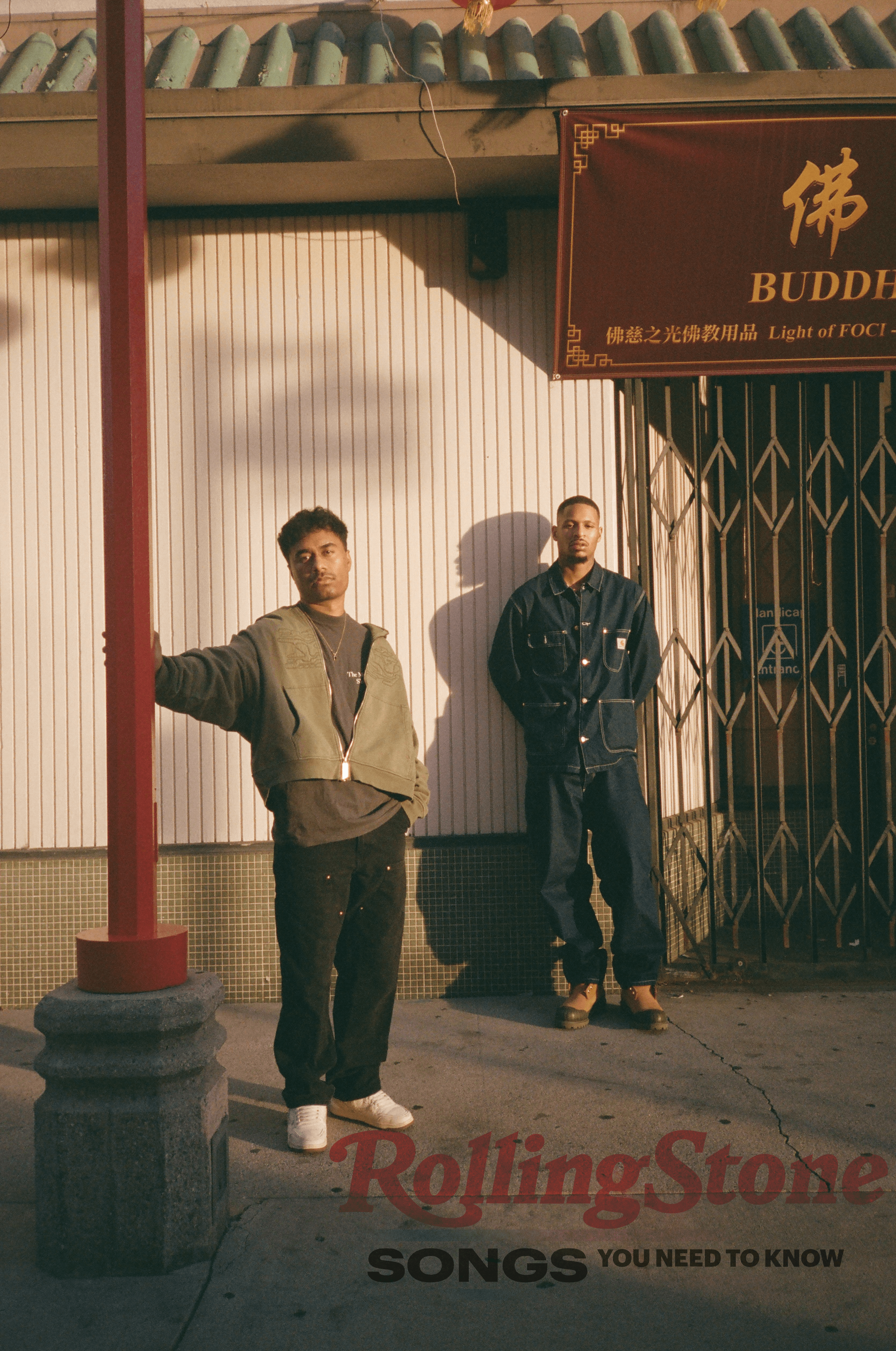
AKTHESAVIOR and Sagun photographed by Rosie Matheson
Arts, fashion, and politics deviate from the classification of race and finances because there's an intrinsic yearning for unity. In that regard, it's quite superficial to use one's culture as a guideline for one's personality. That's how arguments about co-opting and a lack of respect for purity are in our day-to-day feeds. This observation becomes more accurate in modern times, where everyone wants to make a statement but isn't saying anything at all. Presently, we can communicate with whoever and whenever, however, we still feel alone.
Despite that, AK the Savior, a New York-born and now Los Angeles-based rapper and Nepal-based lo-fi producer Sagun, pulls you a seat at their table in their recent album titled "U R Not Alone." On this album, the duo navigates through musical genres while rapping about topics involving cultural politics and discovering where you belong, no matter where you're from. Comparable to the opposite ends they came from to create this album, the two also have a mutual understanding and respect for one another that is non-sequitur to music. They are building a model of self-confidence and staying true to what they believe in because culturally, that's what people want to be a part of.

AKTHESAVIOR and Sagun photographed by Jordan Smith
1. Do you think someone’s appearance is as important as their actual skill set when it comes to music?
Sagun: Personally, it does not matter, but like you said, it does play a big factor these days. But at the same time, if the music is good, no matter how good you look or dress, people will love you no matter what.
Ak: I agree with Sagun too. I think it's important, but not as important as it once was. It was way more important back in the day to look the part and to be a superstar. But nowadays some people are just super talented; uploading their videos or music where it speaks for itself in a sense.
2. One is from Nepal and one is from New York. How'd you guys meet and how'd this project come about?
AK: Sa, you want to tell him?
Sagun: Yeah, so I always wanted to make this kind of rap album, and I was talking to my manager about it to search for a rapper who could collaborate with me. My manager came up with the idea of having AK on this album and told me to send him beats and just see what happens. I just sent him beats one by one and it started from there through email.
AK: I just finished dropping an album called "Almost Home" and I was still in the zone creating music. I'm hands-on with my shit. After that, COVID hit and nothing was popping, but I love music, so I continued pursuing it through it. I dropped an album even though there weren't going to be any tours and I checked my email to see who's hitting me up. I kept networking, and Sagun's manager hit me up with this proposal about a lo-fi producer that would be a good match for me. He then sent me beat after beat and once I got the beats, I heard them and then instantly wrote the beats. It was an instant connection through Zoom calls and getting to know each other. Sagun then came to America for the first time; we met in person and that's when we started working on shit.
3. Do you think the most radical thing nowadays is just to be normal?
AK: Yeah. I agree with that. In today's world, music matters, but it's more about content. It's king right now. People are focused on ways to go viral. Within the fashion world, to go viral is to have shock value, so people might buy certain things that they may not necessarily like the Mario boots. They'll just wear that shit to go viral, but not like it.
Sagun: I agree. Some people just do anything and everything to go viral. I'm not mad at that though.
AK: Yeah, fuck it.
4. Talking about anime has been sort of taboo for minorities to talk about in recent years. Do you like that this conversation is more on the forefront or does it feel like just another opportunity to exploit another subculture?
AK: I think anime is for the world. Just because someone doesn't bring anime into the forefront of a conversation doesn't mean they're not about anime. I think what people are worried about now is that anime is getting super popular. It's becoming larger and larger and when things get big, more people just jump on the trend to be cool. Anime people are real gatekeepers and if someone's repping something that they know wasn't in it in the first place. Then it becomes "Nigga, you never liked that kind of shit before...". I think you just couldn't tell someone was into anime based on their music and image. You don't have to promote something to like it.
Sagun: Everyone around used to watch it, so I could never think or see people say they don't like anime.
AK: For instance, I always said I loved anime and made references in my music, but I feel like if those same people saw me out in New York with my homies looking like goons; they would think there's no way this guy watches anime. I got many anime tattoos and they're part of my life because they changed my life, so you can't judge someone based on how they look.
5. I know of the recent loss of the creator of Dragon Ball Z, Akira Toriyama. How did you feel about the sudden loss and how did his work influence you as an artist?
Ak: That shit fucked me up. Dragon Ball Z changed my entire life. As I grew up on it, I realized there were a lot of subliminal messages within the show. Some people may just see it as a cartoon, but Ki is a real thing. It's not just energy blasts and shit. Ki is the real energy we all have. Akira took that concept and made it playful, but we all have energy within us.
Sagun: I feel the same when I watch the Vineland Saga. It teaches you how to control yourself, your people, and the environment around you. You guys should check it out. I love that one.
AK: In the anime, there are so many gems that are dropping that apply to real-life men. People sleep on it! I encourage anyone reading this to watch anime because it'll change your life. And if you don't like fighting or energy balls and shit, watch Death Note (laughs). That's a great warm-up.

AKTHESAVIOR and Sagun photographed by Brayton Bowers

AKTHESAVIOR and Sagun photographed by Rosie Matheson
6. I know fashion and music go hand in hand, but it can sometimes be an obviously desperate opportunity for an artist to capitalize on it as a "business venture". What other ventures do you think we need more of from our current and future artists?
AK: For me, I'm one of those artists who are already venturing into different things. I'm into fashion, so that's not farfetched as something I could get into. I have friends in the fashion world too and I see how hard that shit is. It's some shit that's easy to tap into unless you're the type of artist who'll drop anything and people are going to follow it. I don't think I would get into it like that, but I don't want to cap myself either.
IR: You're also an actual artist.
AK: Yeah, so a couple of business ventures that I do include a jewelry company called "Florescent Treasures" and I even wrote my own manga called Nakaomiru, which means look inside. I also do paintings now and then because I'm the type of person who, whatever resonates with me at the moment; I'm going to tap into.
Sagun: I'm getting more into videography and photographing. I like how videos are done and if I'm not into that, I would get into coding. I love coding.
7. How much does your art correlate to your music, and vice versa?
AK: After I linked up with Sagun after recording "You Are Not Alone" almost 2 and a half years ago. I started painting a lot during our time recording it. I wanted to make new shit and thought, "How do I make this shit correlate to my music?" because niggas is not going to just accept a painting, so I had to make it make sense. All the cover art and single art was me painting. I had a project called "Tracing Patterns" where I wanted to connect my paintings with my music. I wanted to make something for what it is and I hope people don't get too judgmental about it.


8. Given your start in the rap group Underachievers and being part of this psychedelic rap that rappers such as the Flatbush Zombies, Asap Rocky, Danny Brown, and yourselves brought to the generation. Do you think drugs were the bigger inspiration or what role did psychedelic drugs play in this exploration for you?
AK: I think psychedelics played a huge role like you said, and people were connected to us through psychedelics. But I feel like I was speaking on more experiences I had when I was younger. The Underachievers were taking psychedelics when we were younger when we created "Indigoism" and things like that, but people got the misconception that we were tripping every single day. We weren't tripping every single day. Four times a year I would trip, but I can only speak for myself. Now I only take psychedelics once or twice a year when I need that spiritual push or boost of inspiration. Psychedelics is something you shouldn't abuse because if you do, that's how you lose yourself.
IR: I mean, that's how people become Deadheads into their 70's.
AK: Yeah(laughs). There's nothing wrong with being a fan and taking psychedelics. But if you let that shit just take over your life, you remove the balance and become lost. I love psychedelics because they changed my life, but you don't need them. I think I never needed it. It's here on earth for us to use and work together, but you don't need that for the spiritual growth that I've gotten. You just need to work to be the best version of yourself by reading books and enhancing your knowledge to bring enlightenment to your life. Drugs don't enlighten your life. That doesn't work and it doesn't fix your problems. It's just you and the journey you choose to go on.

AKTHESAVIOR and Sagun photographed by Brayten Bowers

AKTHESAVIOR and Sagun photographed by Rosie Matheson
9. You come from a multicultural background, which is one of the themes of your upcoming project. You are not alone. Growing up, did you feel out of place as someone who's multicultural and what helped you feel more included?
Sagun: I would never be who I am if I didn't grow up in my environment, so no. I never felt that I was in the wrong place or at the wrong time. That's totally who I am and I've always accepted it.
AK: I feel you 100 percent. I'm thankful to be from the Caribbean Islands and get the influences from the music to the food. It makes us who we are. When I was a kid, I went to school in Harlem from elementary to junior high school, bro. At that time, growing up, Spanish and black people were being. Oh, my god. As a kid, I was like, Why, and kids would try to fight me? It was just so weird because even other black people were fucking with me because they thought I was Spanish.
IR: Given how you look, I was going to say that! Was it a Dominican trying to fight you even though you guys are the same color? (laughs)
AK: BROOOOOO!!! I always questioned it. Why, why, why? Then I went to school from Manhattan to Brooklyn as I got older with more black people and Caribbean culture. In Harlem, niggas used to make fun of me and shit. Saying, "You got big ass lips, bro!". They said mad funny shit that made me feel like I'm not shit. But when I got to Brooklyn, I was the most popular dude in the school. I was just confused during that time, but all that shit happened for a reason and I'm grateful for it.

10. How do you think racial and cultural issues will change in the future as society continues to blend?
AK: I have high hopes for the future. The issue we have today is that the people who created these ways of thinking and ways of life through racism, etc. are still in power. If they're not directly connected to it, their sons and daughters are now in power. As we grow older and new generations come, there's going to be an understanding that we're all together as a human race. This skin color sh*t is stupid now.
Sagun: Totally.
AK: They've even shown now on certain websites what the future people are going to look like if we blend.
IR: Yeah, everyone's going to look like The Rock.
AK and Sagun: (laughs).
AK: I don't want everyone to look the same. That's boring, but if we all look the same, how are you going to judge me? Like on this album, "You Are Not Alone" ,we want you to feel like we're different from you. We are all humans with similar and different experiences, but the bottom line is that this is life. These are things that we go through and we're just sharing life as you are too.

AKTHESAVIOR and Sagun photographed by Rosie Matheson
11. What would you say to someone dealing with these types of issues when trying to find their voice?
AK: Follow your heart and whatever resonates with you. Do what matters and if you feel a certain way, express yourself. Don't bottle it up. When someone says no one understands me, it's like, of course, no one understands you because you didn't express yourself. If no one is truly listening; go out and find the person who's going to listen. You are not alone.
Sagun: If you think you're going to fail, keep trying.


Success is defined as achieving the desired goal. A goal to be rich and famous or simply just to wake up another day depending on the individual. But so often we compare the lives and things of others to equate our happiness without realizing they are no more people than the things they have. It's not what you acquire that makes you great and successful. It's what you bring and who you truly are. So if celebrity and luxury are the apexes of success, does that mean our dreams are invalid if we don't want that? No. Truth is, what defines success is a testament to one's values.
What we value differs from person to person, but with social media being one of the dictating factors of how view the world, some value the opinions of others more than ever. Image is the biggest influence to the point of likes and comments manipulate your whole existence. One can view the lives of others showing a perfect lifestyle, not knowing they worked hard to create this illusion. So if you can look successful, why work hard to be successful? Because much like our heroes or idols, it's the journey and struggles we persevered that define and inspire us.

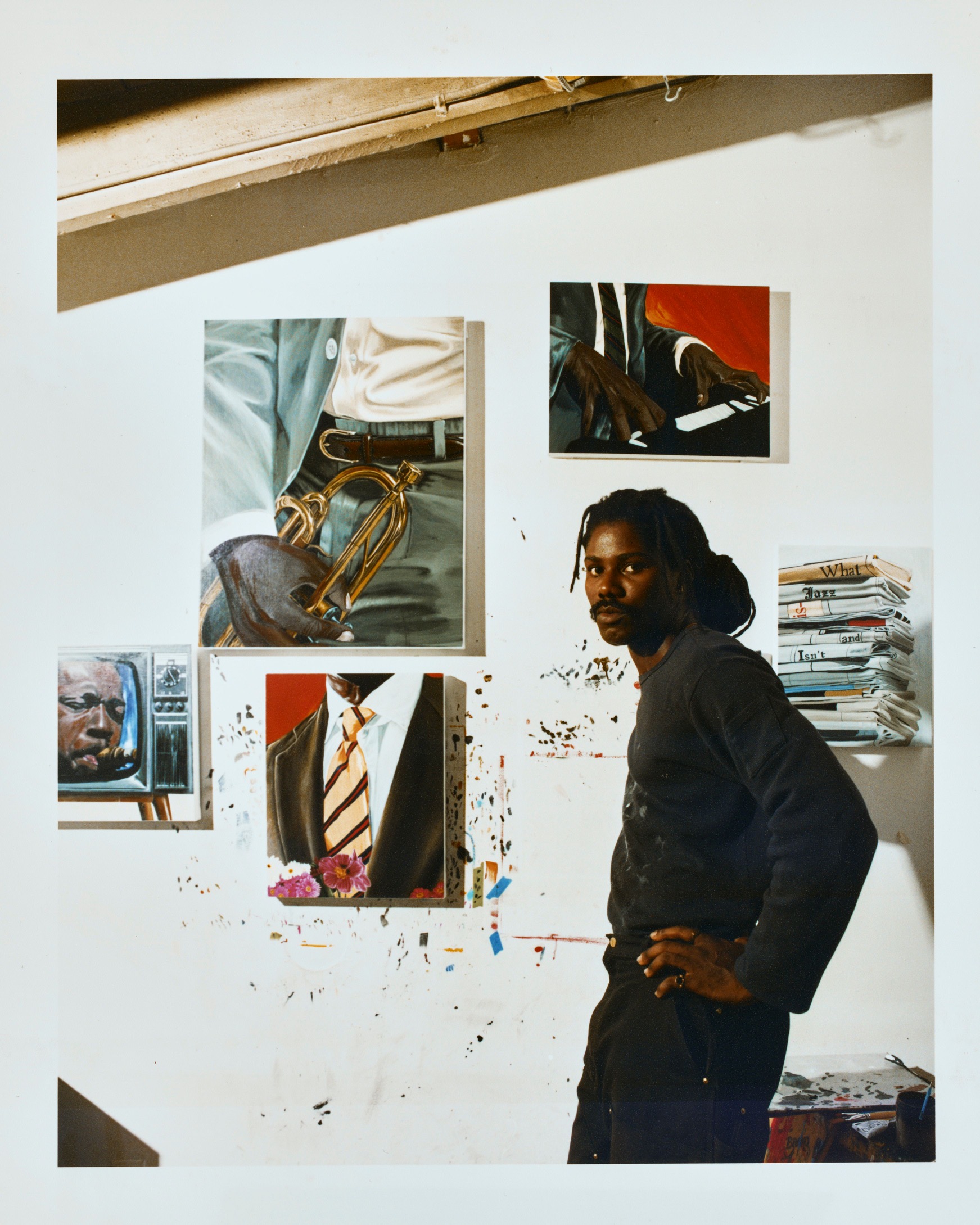
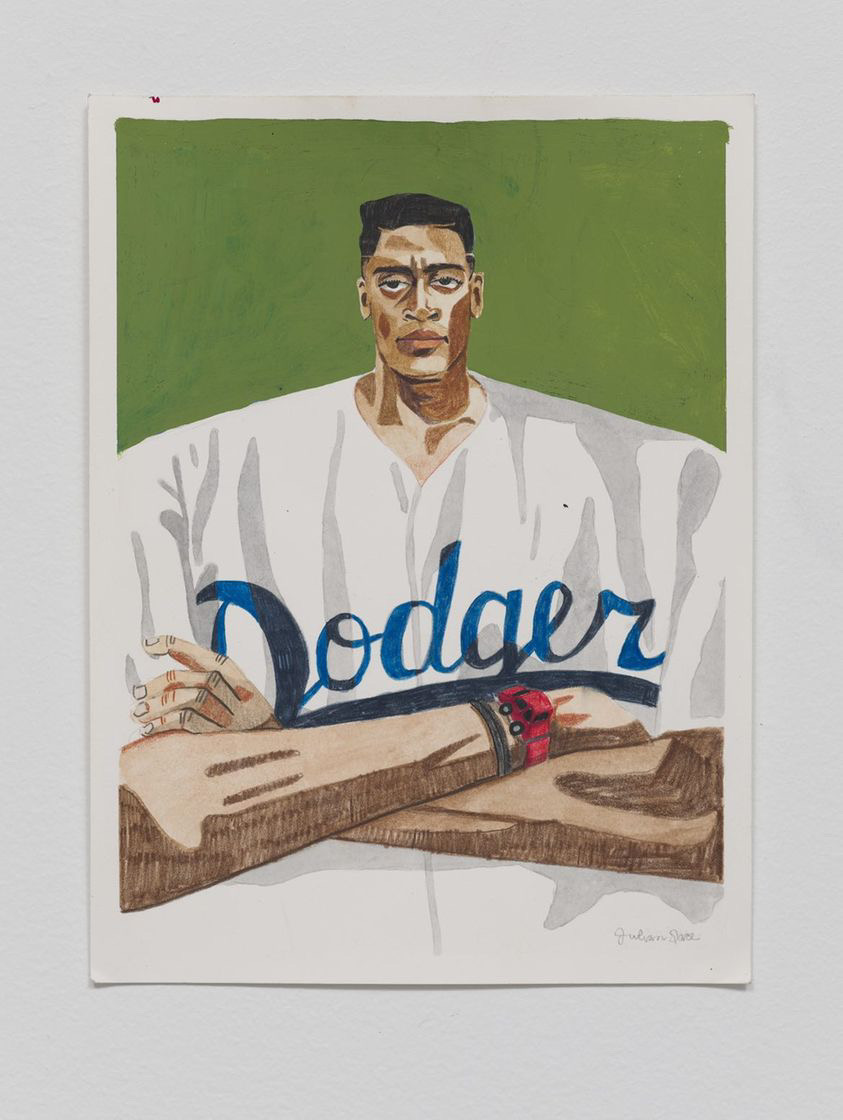
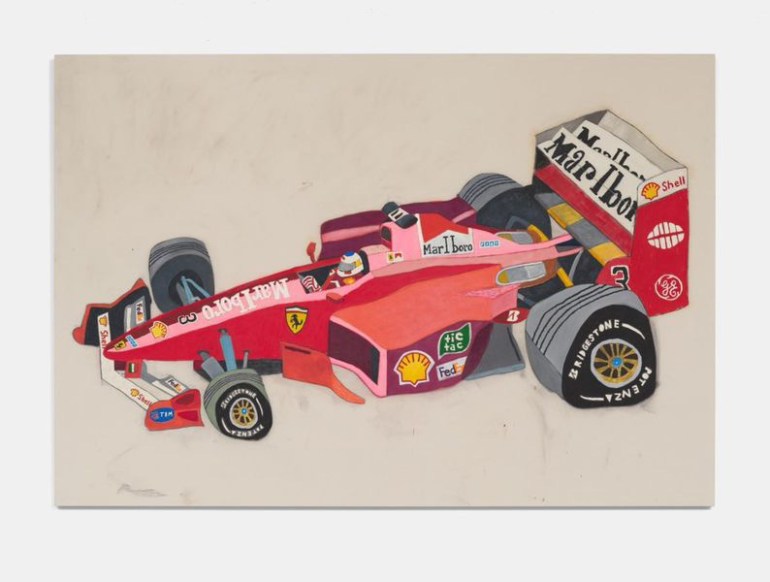
Julian Pace, a self-taught painter whose ambitions led him from Seattle to New York and now Los Angeles utilizes famous figures and things that attract us to reshape how we view them. His precision in oddly detailing his subjects stands out as a form of alienation in his paintings. The abnormal use of portion, roughness, and stale coloring illustrates that what we are attracted to isn't as perfect as it looks. It's a full embrace of one's character and imperfections assuring us that we all want to achieve something; so appreciate the process more than the product.
Interlude and interview by Ian Randolph

1. In all mediums of art, social media has been a tool to promote an artist's work without the hassle of getting shown in a gallery. It can be lucrative, of course, but when one does it opens them up to a market where there's more competition for exposure, let alone discovering other artists who may have a similar aesthetic. Does that worry you?
JP: No. Not at this point. I think my mindset in terms of social media was never to be "discovered". For me, if I have something to share with the world without knowing about getting into galleries. I used to draw in my sketchbook and just put it out for people to see and to keep myself focused. I drew my whole life and stopped for a moment, so when I got back to it, I used my sketches and posts as a personal quota to keep me going. It kept me more focused. It kept me honest, so if you just put something out into the world, maybe someone will see it. Maybe someone will like it or not. Luckily someone reached out to me through Instagram to do a residency and this whole new world opened up.
IR: So you're not swayed by any of this? You're self-motivated.
JP: No. I'm inspired by other artists and I'm definitely on social media heavier than I should, but I'm not swayed. I love to see people doing well and see new art because I never went to art school. My art school is just to see the people around me. It's cool to me.
2. The idea of what a celebrity is and how to become one has taken a big shift in recent years due to social media influencers. Do you think art now is more about your personality rather than skill?
JP: Maybe with social media the idea is "They don't buy into your product. They buy into you." Maybe that's true. I'm sure there are plenty of assholes that are successful because of it, but I don't think you can really know someone through social media even if it seems like you can. If you meet someone in person, it's usually different. One time I met someone who came to my studio and said "Wow. I thought you were a serious and stern kind of guy, but you're not that or who I thought you were." I guess because I don't smile in pictures. If you see that, you would think "This guy is a serious something, something," but I don't take myself too seriously.
IR: You just seem more focused. Like "I could be working on some shit right now...Did I leave the oven on?..."
JP: Yeah(laughs)! I mean, I use social media as a tool because it is a powerful tool, so I try to use it and it's a place where you can see what I'm doing.
IR: You're also very particular in what you're doing. You use certain influential icons in some of your works and every artist, athlete, etc. they have their influences.
JP: Somewhat. My work touches on celebrity worship or cult of personality that we build and a lot of times you might see somebody and have one idea, but the reality is they're not that person.
IR: Never meet your heroes.
JP: Yeah. Never meet your heroes(laughs). And maybe there's no such thing and you shouldn't have heroes. I can love a person's work and then you meet that person and find out they suck.

3. For purist sake, is it possible for an artist to be unique by creating something substantial without any influence?
JP: I don't think so, but it depends. There are always new ways of doing things for sure. People can have fresh ideas on how to do something, but everything comes from somewhere. Nothing is new under the sun and I think that as a species we are definitely cyclical. We repeat things, touch on things and appropriate them. I think an arrogant thing is that we're supposed to be a melting pot with our entire culture coming from certain things, but I don't know what's truly original at this point in history. It's not a bad thing. I do a lot of derivative work. I borrow or steal just to use the resources that work and if it doesn't work, whatever, but if it does work, I keep using it.
IR: We are essentially a product of our environment?
JP: Yeah.

4. Do you think you can be just as much influenced by your environment rather than another person?
JP: I think it's both, for sure. I don't think it's more one or the other, but it depends on what you're choosing to make. I'm doing a lot of person in my work and these are images that I've seen or people saw throughout my life. At least what I do is a reflection of what I see and put out when working within. Other people see the world in different ways and so the art comes out differently. You might be using techniques or tools, but maybe that's the thing that is unique if you're being honest and true to what you're doing in that sense.
IR: It's subjective on what is important to us. You can look at a NASCAR, a color, or a person for inspiration.
JP: Exactly. My friend Taylor did a painting with an Evian bottle on it and it's interesting because he never really uses branding in his paintings, but it's interesting to see how he does it from a different point of view than me. I do a lot of brand stuff and someone else doing the brand thing is different because if I painted an Evian bottle, it would be totally different from his because we're all looking at it from a different perspective.

5. Speaking of perspective, I feel we live in an age where likes are at a higher value than money. Which, if played right, can lead to something profitable for an artist. From a marketing point of view, how do you as an artist find that balance as an artist while navigating to success without antics and solely good work?
JP: Yeah, some people can get lost in the sauce(laughs). Either way, I try to be more of the latter and things like social media kind of might give you a false sense of superiority or inferiority in a sense. Maybe if you didn't get enough likes on a post it doesn't mean it's bad or good. It is what is it. It doesn't dictate or judge the quality of your work, but people definitely might get caught up in shit like that or caught in their own hype, so they believe the bullshit and let it go to their heads. At the end of the day as an artist or whoever you're you in the end and not to say art isn't important, but you should be very grateful for what you have because very few people can actually sell their work. It's a tiny percent that makes a living off their work. Out of all the artists in the world, that's so rare. How could you not see that and think "Wow! That's a humbling thing.". The fact that someone is coming into my studio and interviewing me for this magazine is insane to me. It's cool and I'm grateful.
IR: I mean, you put in the work to get here.
JP: Maybe, but a lot of people put in work. Humility is something that's not shown a lot on social media or necessarily encouraged. A lot of people think you have to have this certain bravado that's genuinely false.
IR: That's fair. It's some people want to be bigger than their creations.
JP: There's a lot of that. It's hard to say because you can't believe much of what you see on social media... I hope I don't have that presence.
IR: Not at all. You walk softly and carry a big stick.
JP: Cool(laughs)! Thinking you're the shit is just very unnecessary and there are a lot of things on social media that encourage that. I mean, do your thing, but also be grateful for what you have.

6. In regards to inflated egos, I've noticed that most of your paintings involve famous public figures with big bodies and abnormally small heads in comparison to their stature. Is it intentional or is it simply your aesthetic as an artist?
JP: At first it was just a thing I was playing with by distorting proportions. The story on how I got into that was I did a drawing and a painting of Dennis Rodman and my friend John in New York who's kind of like a meathead, who's the best, but he's a bro from Long Island and he was like "Look at those baby bird shoulders!". And he was so right, so I made one with inflated shoulders.
IR: The NLF Blitz create-a-player version!
JP: Yeah, exactly(laughs)! After that I was like "Damn, I kind of like that one." and just started playing with the proportions. Sometimes they're a little more extreme. Sometimes less. It's just with these guys the portraits give the perspective of something grandiose. Someone said that it makes them feel like "a kid looking at their hero".
IR: The physical manifestation of a "Legend".
JP: Ah shit! I'm going to steal that one(laugh)! Yeah, that is a part of it. These are also my play of very traditional portraits. It's a stylistic thing but it also kind of works with what I'm doing.
IR: Yeah, dude. There's a Greek or Roman mythology element to it. You use shading like how a sculpture chisels to define one's strong features.
JP: I think of them like a titan or hero figure that you would see these big statues of. Definitely.

7. Many artists use public figures in their work as means of a poetic message or simply used as mockery and entertainment. What are you conveying when using these figures?
JP: It's a little of both. It depends. One could be someone that has inspired me or some of these guys are just sort of a vessel to play with color or abstract colors. When I paint I sort of use the figures as a vessel for that and working with scale. I'm able to play within the forms, loosen up, and still maintain boundaries.
8. What attracts you to these specific figures when creating your art?
JP: You're not going to catch me doing somebody or something contemporary. Not likely. I genuinely kind of prefer doing these sports figures or side figures. It doesn't necessarily have to be a legend in the sport. For example, Larry Bird just had a cool mustache and a funny haircut.
IR: He was also a legend for being one of the best shit-talkers.
JP: Totally(laughs). And I like that, but really I like his mullet and the mustache. I like that kind of attitude and that was a factor in it, but I don't know him.
IR: Apparently Larry was just a good ol' blue-collar boy from rural Indiana. There was no basketball culture where he was from. He was a garbage man up until he got into the league. Besides his skills, those midwest values got him to the top.
JP: Totally and I do appreciate him for that. That aspect shows you he's not your typical or traditional star. Everyone wants to be a star and even with artists, we see on social media, it seems that people what to be a star.
IR: Well, they have camps now where people train all their lives to become one. Basketball. Acting. Even Tik-Tok.
JP: It's crazy cause even mediocre or low-level people have millions of followers and it's like "who the hell is this person?!". It's like they have these PR machines that are pumping them into stars because it's...I don't know. People just want to be stars or want to be famous and I'd be careful with that(laughs).
9. What would you like to be known for the most artistically?
JP: I just kind of do what I do and if people connect with it, it's cool. I don't have any goals of "I want to be this or want to be that.". There are so many good artists that I've been surrounded by since coming to LA. So many inspiring artists that it's just not the point to living like that for me. I have goals to continue to make a living with my art and help my mom retire, but not to be somebody.
IR: You mean you don't want to make a clothing brand, a sneaker brand, and possibly run for president?
JP: I mean I would do that. That'd be cool(laughs). It's just I feel more fortunate to be able to have a space and to be able to do this full-time. I've done so many different jobs. My first job was as a camp counselor and from there I worked many other jobs like at a market in Italy with my father, preschool teacher, tour guide, and bar-back/bartender, but it wasn't until this it became clear to me that was driven in this. With jobs, I just moved in between and if it didn't serve me anymore, I'm not doing it anymore. I never put my full self into anything but this. This is what I'm supposed to be doing and luckily I'm very fortunate to be doing this full-time. Everything I've done has led me to this, so I always keep that in mind. I wouldn't change anything because it was beneficial for me to choose that path. It made me more grounded and appreciate what you do and have.
IR: It sounds like you know how to preserve and appreciate the good things in your life. Sounds like you're a working-class artist because you have the background and the backbone for it. Self-taught without a trust fund.
JP: Have you heard that saying "It's easy to be a starving artist when your parents are rich."
IR: But of course.
JP: And it's true. It's funny, but I'm not going to be the one to shit on somebody who comes from money.
IR: Naw, they're lucky. It's just what you do with these privileges and opportunities.
JP: Right. If you're doing your thing and working hard on doing stuff. More power to you as long as you're not an asshole or pretentious dick about things. That's more important. People just have different starting lines.
10. Which comes to my next question would you rather be loved for what you've created and hated for who you are or loved for who you are and hated for what you've created?
JP: Ah dude(laughs). That's a tricky question.
IR: Well, you said people assumed you're serious or pretentious before they met you.
JP: Right. I'm not concerned with people loving me for anything. You can't control what other people think or feel about you and in this world of social media, people might see me as one thing and another person the other. Maybe they're right, but I'm more concerned with the people around me like friends and family. I have more concerns about how they see me. Obviously you might hear someone like "I don't care about what other people think of me!". Of course, we do. We're all sensitive. We all have egos, but I don't get caught up in what the broader public thinks of me. I'm pretty solid and confident about who I am. I know who I am and if someone thinks I'm something. Maybe I am. Maybe I'm not. That's fine.
IR: All work. No politics.
JP: Kind of. I don't think people would like that answer if I said I'm not concerned with politics(laughs). It is what it is.
IR: Dude, you're just trying to work.
JP: Yeah and I do think there's this "Art world politics" that goes on. Me and the people that I'm around, we're just working and don't get into the weird scene or whatever it is.
IR: It's hard not to in LA. You can get swept up.
JP: Yeah. I've been here for almost 2 years, but it's easier because I came here not knowing anybody and I slowly started to build relationships, so I was able to be picky about it. Also, I'm old enough that I don't need this big "GO OUT IN THE SCENE AND HANG OUT". I got an early night. I'm trying to go home and see my girlfriend. Shoutouts(laugh). I just chill and maybe if I was in the scene at like 21, I would've been more out there. Luckily that didn't happen.
IR: Maybe that was the universe showing you that things happen for a reason.
JP: Exactly. Now I know who I am and what I want. I never planned anything in my life and sort of went with what felt right at the time. Now I have a focus and passion that has found me able to do what I do. My main concern now is doing what I love to do and doing it the best I can.

11. Now let's go back in time. If social media was around during some of your figure's eras, do you think it would be beneficial or detrimental for them?
JP: It would've just accelerated. Social media does more harm than good. Whether it would be good for them, just depends on how you look at it. Would it help them make more money or be famous? Absolutely. It does that. It can do that, but I don't think it's good now for us. It's a useful tool if you use it right, but it's also very harmful. We're the same humans we've always been. This technology has corrupted us, but for me, it's done well. There are benefits, but everyday it can cause me unnecessary stress, so it would be the same for them. They're the same kind of people as us even though we like to seem like we're advanced.
Photos courtesy the artist and @alexandrakern.

- No Comments!
Jasaya Neale: Much like himself, his work is more than just looks.
The definition of style is a manner of doing something or being designated with a particular name, description, or title. Appearances are often seen in more shallow terms than for what they are, instead of how they are. To dress for the part, as they say, is a tool to gain some time; nevertheless, we should also have something to offer in order to really stand out. It could be in the way we wear our clothes or the way we do things. We appropriate these features to show the people who we want to be, as opposed to who we really are. Without shame, it's understandable in society that we manifest and dream outside of ourselves for something better, but the real worth comes from what is true to us.
As children, particularly men, most dreamed of being an astronaut, doctor, construction worker, etc, but in our early teens, a shift happens. What were then deferential beginnings, turned into audacious looks and a life of overindulgence for the rich and famous. Now, in this post-social media world where fashion and lifestyle are more deceptively tethered, the creative director can now assume the identity of the cowboy or construction worker without question. In the end, most people look more cultured or handy than they really are because they get the most attention by playing the game that we once played as children. In spite of that, we should not lose our values in the things we value, no matter how much freedom we have in our autonomy.
Born in Kansas City and now in Los Angeles, painter Jasaya Neale is not only a man with style, but a man of principle. His work conveys a truth and confidence in how we should view ourselves when just wearing "clothes". Like the fundamentals we live by, each detail conveys a feeling of pride and accomplishment. Without high-nose ostentation, Jasaya undresses the opinion that only a certain group of people should have the privilege of being allowed to wear or buy certain garments, but really, the people who worked hard to purchase them. Oddly, some of the poor work to look rich while the rich work to look poor or average. Rich man or working man, who can tell the difference when class, much like style, can't be bought.
Photo by Darren Vargas
Jasaya was kind enough to engage in a bit of Q & A with me:
Ian Randolph: Are you afraid to be an artist more popularized by your looks than your work?
Jasaya Neale: Definitely because you'll see these fashion model dudes that kind of do art, but they get known for modeling more rather than being taken seriously as artists. That's for anything too. Like, you could be a musician and kind of stop doing music and start doing fashion or stuff like that. I think it's just so natural when a brand works with you and likes your work. I feel like I've been blessed enough to do my own thing. With modeling and with artwork, you can do stuff with the biggest brands. I can see how that kind of popularity can erase the work that you've made, but it's all still me. Because sometimes you can benefit from brands like they are from you. We make the shit look cooler, so at the end of the day, if you keep that mindset, it'll always stay. Manifest, work on the shit you like, and it'll work out.
IR: Like some of the art legends, such as Basquiat, Jackson Pollock, and Picasso, they all had great personal style. How would you describe yours?
JN: Personal style, man... that's a good question because it does come back to the artist and their style and who they are. It's as important as the work. Much like how you look and how you carry yourself. Your energy, you know. I'll speak the word before anything. I think my first start just goes back to skating. I grew up skateboarding and being in that culture. There was that freedom of wearing whatever the fuck you wanted to wear. I never really felt for trends, and people looked at me weirdly, just growing up as a black skater. I mean, this is every black skater's story, but my personal style came from that. There was such a group of people skating, and back then, you were influenced by the baggy stuff, Nike SBs, and stuff like that. That was just always what I used to wear, but then I started getting into film, cinema, and photography. The old vintage look and 60s style, really. Tailoring incorporated how I put all my stuff together. Now today, I feel like cinema and jazz are a big influence on my style. I'm a moody type, so I love jazz. (Laughs)
IR: It's funny because when I first saw you at Capri Club with your people. I was like, man, this really is the "Mr. and Mrs. Cool guy bar," in a genuine way.
JN: Man! Shout-outs to Capri! Capri has the best people compared to other bars in LA. To me, Capri is just a good spot to meet good and genuine creative types. Artsy and stylish. It's always been cool.
IR: I think it's because it's the closest thing to a niche European bar that has gathered these like-minded people. Speaking of, when I saw you at Capri that night, I was like "Dude...this guy looks like the man"(Laughs). But I noticed one thing that really stood out, the KC Royals Hat you were wearing...
So when my boy Steve was asking if you were from Texas, I thought that was sick because you wore it as a symbol of pride, but also humbling nobility.
JN: Yeah! I wear all these like nice clothes, but let's not forget, I'm still from Kansas City. This is what made me, right? That's exactly what it is, man. People who can come from these small towns and shit that move to New York or LA and start wearing Yankee hats like I'm this now. They forget where the hell they came from. Come on. That's not what it is. I'm very humbled by what I've done. There's so much more to do, but I know I've made it far in my career to realize where I've come from, and I don't want to forget that. I'm doing these campaigns, shoots, and galleries, but you've got to let people know where you're from. You know what I'm saying? You're not going to catch me with Dodgers on my head. I'm not from LA, but I love LA. I respect it. I'm grateful, but also with my style, it's more of a uniform, which is very important to me. I feel like having a uniform, you know, is not for clout, but separating yourself from other people, because it's great to stand out. I think having a solid uniform and the consistency of having one is very sick in my opinion.
IR: Who are some artists who have inspired your personal style?
JN: Crazy. I mean, as far as OG artists...Noah Davis is a really big inspiration as far as artwork. A lot of African American cinematic shots that he would paint, but as far as the people that I'm really inspired by are the homies here, man. Like, shout out to Devin Reynolds, Ozzy, and Mario.
IR: Do you know Michael McGregor?
JN: Yeah, Gregor. Shout out, McGregor. I wouldn't be where I am in the art industry if I didn't meet these dudes. I would get put in group shows years ago from them, just like knowing me and being like, "Tree, like, you want to get in this group show I got?" That opened up gallery opportunities by going to their group shows, where people would be like, "Who's this cat?" I've gotten solos just from going through Ozzy shows. He and some other homies were getting known off that as well. That's the importance of having a good community here, too. These artists that I like looked up and pushed me to get to where these cats are. The homies.
IR: Is there a big art scene in Kansas City?
JN: KC has a big art scene for us. School-wise, KCAI is one of the best art schools in the country. KC Arts, too. It's right next to the Nelson A. Museum, but as far as like how we do art in LA, I feel like you don't really have to go to art school out here to get a solo show. I didn't go to art school. Almost did, but then I would go to these things downtown called First Fridays. It's where you just kind of like set up a booth or table and sell things. A lot of people come out, and I would sell drawings. I was like 17 or 18, and the moment that I knew I didn't want to go to school for art was when a woman who couldn't speak English bought my drawings. I think she was Brazilian. Anyway, I was selling those drawings for $100 at the time, and she grabbed 4. Again, she didn't speak any English, but something moved her to buy it and that's when I knew I needed to do this shit. From there, I was doing work for commissions, taking requests from people, but more amateur stuff. I mean, over time, you move to different cities, you get exposed, you meet people, and you grow. Moving out here and obviously getting into those group shows by meeting people helped me learn more about the art world. These experiences alone helped me realize that I made the right choice.
IR: Do you think being a Black artist is limiting or has a negative connotation when defined as one?
JN: That's funny you said that. I was just talking to a friend about this the other day. To answer that, I never wanted to be in that. That category of Black art. African American artists who only worked with Black galleries, black fundraisers, and things like that. I think it's very cool, though. From where we came as Black people, to be able to have our own galleries. You know, it's a lot of wealthy black people that are supporting Black artists and putting them in museums, which is fire, but I never wanted to be limited. I never wanted to just have to work with Black this and Black that, so that's why I'm in different shows that are group or topic-based. I've done an Afro-Caribbean show just out of love and curiosity, besides being that. My pops was from Trinidad, and being Trinidadian as well as Cuban, I always felt something shared between those cultures. Being out here with a lot of Hispanics and my homies put on a lot of Hispanic shows, where they put their people on the map in art. That made me think that I don't see any Caribbean shows here in LA seen as high art. That's something I wanted to do for sure. I used to paint old Latino people here in LA, to now working with European brands, but the message remains. I just don't want to limit myself because that's not the whole world. In America at least, Black art always had a traumatic aspect to it. That's the shit that irks me. I don't have to make art with colorful depictions of slavery because I feel that's the only way rich white people are going to collect it out of guilt. Some love the sob story of the African Americans’ work, but what I'm saying is that it doesn't necessarily have to be the main thing you do as a Black artist. I will say, I have respect for those artists who have made a full career out of it, but I would never limit myself in that way. I always wanted to be seen as a fine artist who can work with any culture. I want to show in galleries in Japan because they really respect art, regardless of whether it's only Black art. It's only art, period.
IR: How has fashion and modeling redirected the way you paint?
JN: Not in a crazy impactful way, but I think just more as it influences in the same way as a person who's never traveled and then seen the world, and how it opens up your eyes to meet different people. Style and how everyone else influences you is the same way as listening to different music. Just that one song or artist can open you up to new genres. Talking to models and producers on set, seeing what they do for a living, compared to what I do for a living. It's a nice wake-up call that I take back with me when I get home, so I can see how I can put this in my work.
IR: There's a great use of hue coordination in your paintings that allows the colors to be the real luxury in your work. Are you a fan of Kerry James Marshall?
JN: Yeah, he's one of my favorites.
IR: Do you know that whole thing about him using over 50 different shades of black in his paintings?
JN: Yeah, that's the detail of look. I have a book upstairs called The Studio Artist's Life, which has a whole bio on all his shades of black. It's insane. I kind of changed the different saturations that I used in my work. I used to do a lot of dark. Well, I still kind of do dark and moody colors, but when I do more of the luxury or loose works, I try to do brighter colors. Like if I'm painting ties, socks, and t-shirts, I just try to incorporate how I would like to dress into the work, too. I kind of use those colors depending on the work that I'm in.
IR: Your art details a life of luxury. From cars to clothes, do you think that it is still relevant in life to strive for nowadays?
JN: Yeah, I think it's definitely coming. We've seen it the most in the last few years. These couple of years have been very important. It's been very preppy and dapper, and that's been coming out in these little groups that are in style nowadays. It's very important right now. Younger people are realizing that having a genuine style now can be profitable.
IR: You know what's ill? I just got back from a trip to Rhode Island. Newport, to be specific, was the epitome of generational wealth. I was just surrounded by 4th vacation homes, boats, and people fueled by brunch chardonnays without a care in the world. It was actually sick (laughs). You'd be lying if you didn't want that lifestyle.
JN: (Laughs) A lot of those cats out there on the East Coast really embrace the lavishness of old money. I know brands like Gant and Drake's Diary do the most pop-ups in Rhode Island. They have a huge fan base out there. I can see that, and that would be sick to experience that at one's point. (Laughs)
IR: What's the most valuable possession you own?
JN: Probably my rings, my ties, and my loafers. Most importantly, the rings, though. I incorporate them into a lot of my work, too. A lot of hands and gold, which has always been a very Caribbean-Trini thing. I've always been connected, just like luxury gold rings, and if I don't have them on, I feel naked. It's always been a part of me, you know? It's going back to tone. Black skin and gold. I feel like darker skin has always been more attracted to gold. My mom was a jewelry designer, so I literally grew up around it. She would set up in venues and sell her jewelry. Though I'm the only artist/painter in my family, I've always been around people who were creative.
IR: Did you ever help contribute to her designs or jewelry-making?
JN: For sure. All of us did. I have five brothers and three sisters. A big household where she would always have us help her take her trays out to the venue she was doing, or help get her pliers to make jewelry. She would make her rings all the time. So yeah, I've always had rings on. I was the only one who really wore rings among my siblings. I don't paint when my rings are on, but like as soon as I'm done, I get them back on and keep it moving.
IR: What's something Kansas City has given you that you always take with you anywhere you go?
JN: Man... That's a good question. Obviously, the hat is the one. I think of how we met. Kansas City is a very, very friendly Midwest city with cheap beers, barbecues, and sports. The key is friendly beers while bringing you a good time, but humanizing people has always been a really important thing that I've done since I lived out here. Naturally, meeting people and just being genuine or not putting on an act gets you something in the future. I mean, that could be over-said also, but that's the Midwest. You think about the Midwest, and if you were to meet someone else from KC, St.Louis, or Chicago, you instantly have a connection. I take that everywhere I go, and that's why I wear the KC hat. It's funny in relation to LA because you always get that thing about transplants, but in my experience, I've noticed there are certain cities where people come from where they’re the same living in LA. Maybe there's something in the water in the Midwest. I think it's just that working-class, boots-on-the-ground kind of attitude. We're working together, and all that other shit is extra. I'm just here to do my job, do my thing, and just keep it moving. Sometimes I think that I'm not supposed to be here, especially since where I grew up. I grew up in the ghetto hoods of Kansas City with five brothers, a single mom, and no dad. I never even met my Pops. In high school, I knew a lot of kids I grew up with who got killed, and when skateboarding came along, that was obviously an outlet that helped me stay out of trouble. Those experiences alone made me grateful for my life and understanding that you can still love a place even if you have to leave it for good. I always keep that with me.
IR: Should fashion be held in the same reverence artistically as art?
JN: 100%. Speaking of that, I don't design clothes, but when I was growing up, I would go to a tailor and get clothes cropped. I think getting into that when I was in high school and going to prom, it always made me more interested in suits. I wanted to tailor my suit back when my shit was mad baggy. That shit was in, and I wanted to figure out how to do it. I bought this vintage ‘60s Playboy suit from this vintage shop back in high school, and I learned how to sew through YouTube tutorials. I learned how to do it, tailored my prom suit, and everything. From that moment, I realized how hard, how much time, and how many measurements when trying it on. That was a lesson in patience. I think if I were to transition into that, which last year I did a pop-up where I did 10 hand-painted T-shirts. Some white T-shirts and black T-shirts with jazz album cover illustrations. I did it in the most natural way possible I could do it. That transition really showed me to respect the seamstresses, the tailors, and the people working in these industries. Yeah, eventually, who knows, man... Like if a brand hits me about it. For sure. I got fingers crossed.
IR: What is something you would like to leave behind?
JN: That's a good one....Something to leave behind. I never really thought about that...I think my rings, my art, and the things that influenced me. I don't want to necessarily be this deeply impactful or influential artist, but I do want to be the example of what you can be if you believe in yourself. Just work fucking hard and do what you want to do. If you want to be an artist, you just have to not work a 9-5, and if you have to, that's sick too, but just know that being an artist is a full-time job. That's the only way you're going to make it happen. I learned that working at a job where I can't go to the studio, or I'm left too tired to create after, is detrimental. In the end, I just want to inspire people to go for it, and if I have some kids... leave them behind with my rings. Get that insurance! (Laughs)
IR: Are there any brands that you would like to work with?
JN: Yeah. As an artist, Gucci, Louis Vuitton, and Prada are among the fashion brands. Who wouldn't?
IR: Have you modeled for LV before?
JN: I haven't.
IR: I'm surprised.
JN: Well, two years ago, I was on hold for Pharrell's Paris show, and my passport had expired. It sucks because when I got the gig on June 10th, they needed me to fly out on June 17th. Damn, bro... but that's how the modeling world is. You’ve got to be ready at any time for that shit, but it was a good lesson learned. Now, the brands I want to work with are naturally happening. Manifestation is a real thing. When I started working with Buck Mason, Drakes, and Gant, I saw their campaigns and started DMing them. Luckily, McGregor knew and worked with people from Drake's Diary, so he thought I'd be a great addition to their brand. Five months later, Drake’s DM’d me and wanted me to do an edit. I think very important to what you say yes to because that'll just end up coming to you naturally anyway. You won't even have to really try to approach these brands. That's what taking pride in yourself and your work will get you.