

All Posts in painting

- No Comments!

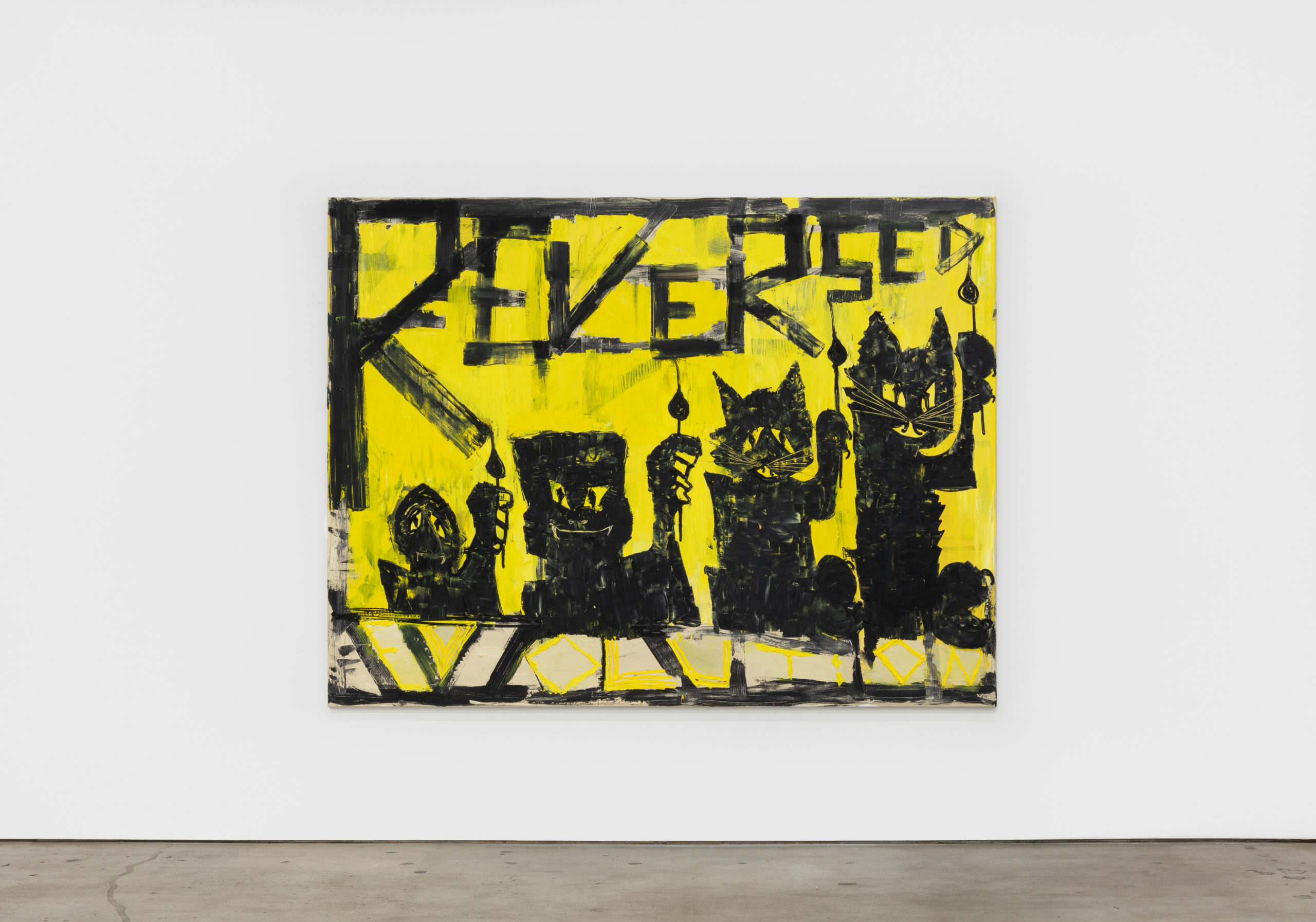
Bendix Harms: Reversed Evolution—How it feels to be Mamon presented by Nino Mier Gallery, Los Angeles

A painter's painter, Bendix Harms operates a spartan palette to personify his farm's new leader, Mamon the cat.

BENDIX HARMS
Reversed Evolution – How it feels to be Mamon
at Nino Mier Gallery September 12–October 17, 2020

Who is MAMON?

"big enough to host the whole world inside her black and white body and impressing enough to be thrown back into the evolution: being Mamon."

Mamon is the new leader of our Danish farm Østerfælden - a cow-cat as a: weapon, a performer, a chief of forest, a melancholiac, a powerplant, a defender, a wanderer, a peacemaker, a connoisseur, a beauty, an h-bomb, an ignorant, a tactician, a killer, a yes-sayer, a charmer, a 48-name-cat, a no-sayer, a multi-radar-tracker - a huge conterpart - big enough to host the whole world inside her black and white body and impressing enough to be thrown back into the evolution: being Mamon. A perfect foundation for continuously delivering images to me - the Concrete- Contentist from Germany - because she is able to operate as a determiner and decision-maker – sending precise orders to my brain– as all my chosen and painted subjects do.

This slideshow requires JavaScript.

It feels like being a reciever of commands that can only be processed, when the relationship between me and the subject climbs on a steel-like level - achieved through love, hate, overmotivated behavior, unexpected physiognomies, humans who put names to things and animals who put names to things…. then the subject overtakes the command-center - like my wife Mari with her square-built-rascal-face, the blackcap bird with his concrete-grey body and his unscrewed black monk‘s head or Rufus the black cat - the former owner of the farm we bought in Denmark – and now the new owner: MAMON.

For me it felt like a liberation from the traditional expressive brushstroke, because each new painting could start differently: dripped, scratched, thickly spackled -completed in one session or in 100 sessions

All are able to determine, and all are able to be formally reduced for generating a repeatable stamp - in my brain and on the canvas. These stamps let my right arm work like a machine - equipped with any kind of spatulas and scrapers, liquids for dripping and paint tubes for squeezing out words and linear elements.

This slideshow requires JavaScript.

The selected subject shouts his precise orders: generate me only in that way, because it‘s adequate for me, its adequate for your paint, for your tools and for art-history - in the end of an artist‘s life only one thing matters: the difference of the work in relation to history.

For me it felt like a liberation from the traditional expressive brushstroke, because each new painting could start differently: dripped, scratched, thickly spackled -completed in one session or in 100 sessions….the narrative motif is the decisionmaker, and my job is to paint them in order to make them speak.

- Bendix Harms

- No Comments!

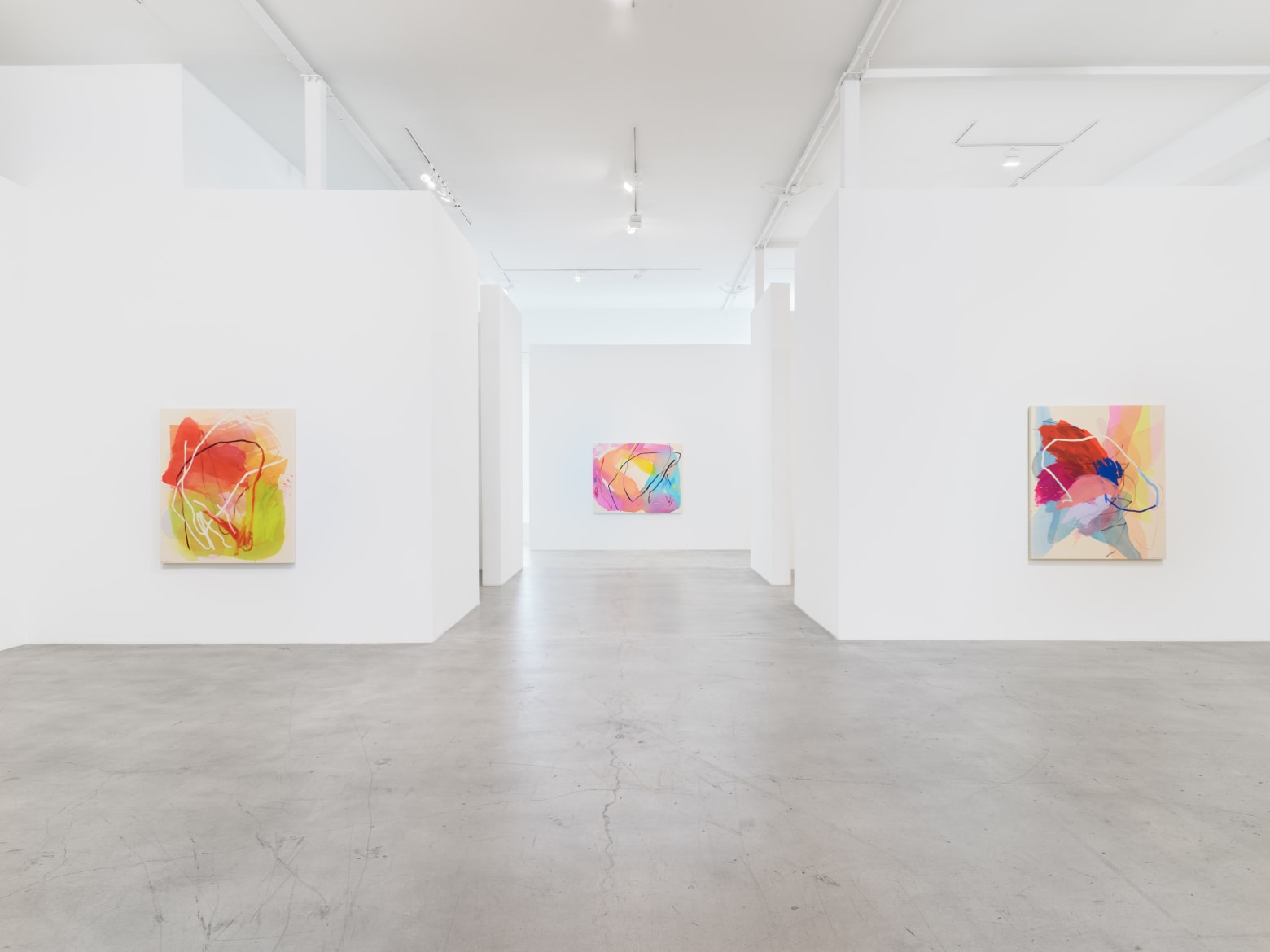
Heather Day: Ricochet presented by Diane Rosenstein Gallery, Los Angeles

Ricochet is a guilt-free delight and a must-see.

Courtesy of Diane Rosenstein Gallery:

"Heather Day: Ricochet -- a solo exhibition of paintings and works on paper by the Bay Area-based artist. This is her first solo exhibition in Los Angeles.

Heather Day makes abstract paintings comprised of scraped, smeared, and flooded pools of pigment. The compulsive energy of her work oscillates between rehearsed abandon and careful restraint. Her encompassing murals, large canvases, and intimate drawings study the mechanisms of sensory perception — mining what happens when the body interprets a sound as a texture, or a scent as a color.

The title of the exhibition – Ricochet – refers to the artist’s process of navigating her compositions as one mark leads to the next, without a predestined resolution. The title is also a metaphor for the global chain of reactions in our natural environment, social and cultural space, and intuitive relationships with each other. This body of work is a new chapter in her practice, beginning with the monumental diptych Fever Dream (2020), which serves as the bridge. The pairing of the two canvases recalls the seam of her sketchbook; and anticipates the new stitched paintings in this exhibition, such as Space Between (2020) which she describes as a “mind map.”

Earlier this spring, during the onset of the pandemic, the artist left San Francisco for Joshua Tree and was surrounded by the quiet and solitude of the desert environment. Here amid the desert spring, she was inspired by the wildflower superbloom and new colors seeped into these new paintings.

This slideshow requires JavaScript.

The paintings in this exhibition were created during a transformative year. Like many artists who have seen their exhibitions canceled or closed, Day’s first solo museum show was closed early due to the pandemic. She feels so much gratitude and appreciation that the show was seen in person, if only for a few weeks. Since then, she has taken refuge in her studio – in the physical and emotional space that allows quiet and experimentation."

Heather Day: Ricochet will be on view to the public from September 12 – October 24, 2020. The gallery is open by appointment only.

This slideshow requires JavaScript.

Photos © Heather Day, Courtesy Diane Rosenstein Gallery

- No Comments!

Artist Feature: Alexandra Rubinstein

Photo Credit: Ida Tietgen

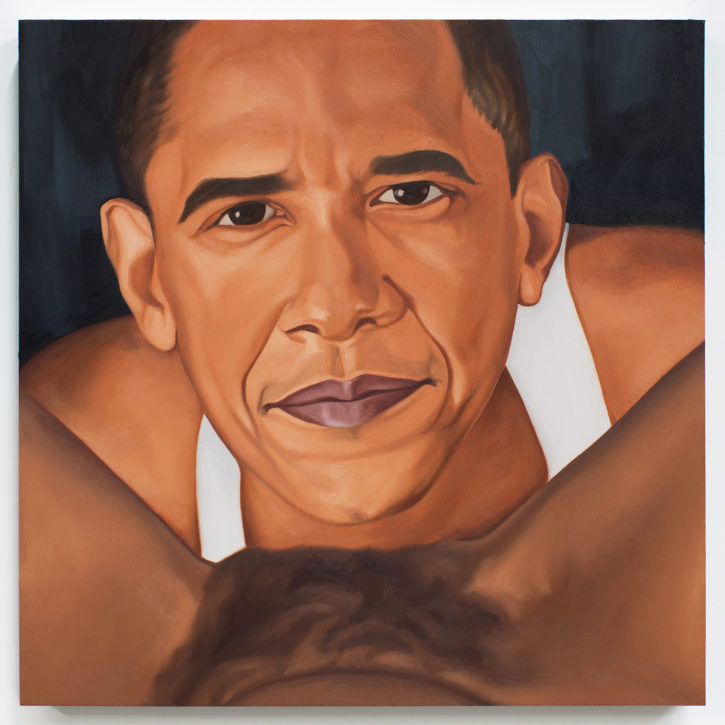
Russian born, New York-based artist Alexandra Rubinstein’s work makes you double take. Your thumb jerks back up as you scroll past it on Instagram, it’s intriguing, draws you in. To some it’s electrifying, others may find it offensive. But Rubinstein doesn’t care about that. She just wants to keep creating. Her work puts pressure on people; it challenges the status quo. It doesn’t matter to her whether you are a sensitive liberal or conservative republican. She creates work that has a message, broadens views, it puts one in an unfamiliar situation that forces recognition. But most importantly there’s humor in it. Rubinstein is a big believer in humor being one of the most important ways in which people connect. One can either see an uncomfortable image of John Hamm looking up at them starry-eyed and be disgusted or giggle at the pope smiling between a pair of legs seeing the play on power dynamics and societal sexual views. Either way, it’s hard not to smirk a bit. We love what Rubinstein’s doing and want her to keep it up. See for yourself below and if you aren't already following her, start to, @therubinstein.

Your work is very leveled, touches on a lot of things, some people may find it offensive, some find it empowering. Do you think about that when creating, pushing buttons and taking people to that uncomfortable place they may not like?

I’m in a bit of a bubble in New York and rarely think about my work pushing buttons. And in the context of art history and the art world, I don't think it’s offensive. That said, in work and personal life, I don’t like to adhere to expectations placed on me by society. So even within this liberal bubble, there is still discomfort around a woman creating work that plays around with power dynamics and sexuality through the objectification of men. Which is good, that is part of the problem I’m trying to address. We need to stop equating sexuality and beauty with women’s bodies, because that’s what’s perpetuating the societal pressure for us to look and behave a certain way, inevitably leading to oppression.

What drives you to keep creating? The people who view and buy your pieces want to be stimulated, but what keeps you stimulated creatively?

I feel most fulfilled and confident when I’m making work. The more I make, the more ideas I get, the more stimulated I am to create. More often than not, ideas organically pop into my head shaped by things I’m reading, seeing, going through, and they develop over time. I think visually, but language is a big part of my work as well. It’s most obvious in titles of the pieces. Reading tends to be one of the most stimulating past times for me. I’m a big fan of sociological books, autobiographies and personal essays — understanding people, how we operate and why.  


What are you working on lately?

The Dream Come True is the most known series that I’ve been working on since 2015. It seemed to resonate with people and I’m always exploring different ways I can connect it to our current climate and keep developing the idea further. So I have a couple of pieces for it in the works. Repetition is also a recurring theme in my work, I think it’s powerful in a similar way that scale is, and more so when you’re using a social media platform to distribute images. No one subject is too important, they function as a group.

Another series I’ve worked on recently is a collection of pieces centered around Jon Hamm as a distant muse. Drawing on his on-screen persona, I used his image to invoke a male idea and explore female fantasy and desire. One of the pieces I was particularly excited about - Hammered, was a 3 dimensional, interactive painting that pulls the sex scene from Bridesmaids between Jon Hamm and Kristen Wiig and displays it in a boardwalk cutout format. With Wiig’s character’s face removed, anyone can enter the scene and be entered, or “Hammered” by Hamm. The added partition mimics the movie screen, inviting an audience and spotlighting the staged union. This cutout format, originally known as a comic foreground, invites play and brings lightness to human sexuality. It dismisses the passive role traditionally assigned to women. Along with the Thirsty series, I’m interested in making more work that’s interactive and lends itself to video, creating a more immersive experience.


I know that you support and donate some of your profits to Planned Parenthood — why Planned Parenthood?

Planned Parenthood is the best-known organization that provides women with affordable reproductive care and with government pulling its funding, it has come to represent the attack on women’s bodies in the current political climate. I do donate specifically to the South Texas branch because it's one of the least funded. So I’m using it for its visibility, giving people an immediate idea of priorities and stance. That said, I’ve also used proceeds to donate to the Puerto Rico relief, and have other causes I donate to personally.


What do you want to say in your work, what do you want people to take away?

I want to challenge old notions of gender, power, and intimacy, and explore how culture shapes and perpetuates these stereotypes. To reframe the heterosexual female perspective as underrepresented, playful, assertive, and also visceral - drawing attention away from our appearance and onto men. I want people to enjoy looking at my work and be entertained by it. I want some pieces to make people laugh and I want them to resonate and hopefully broaden their perspective. I also want to highlight the biased reaction people may have to my work because of my gender.